

Taiwan Semiconductor Manufacturing Co. (TSMC) is riding a wave of record profits as the artificial intelligence boom drives insatiable demand for advanced chips. But the chipmaking giant is also racing against a ticking clock: helping Taiwan secure alternative energy sources amid a global energy crisis that has laid bare the island’s vulnerability.
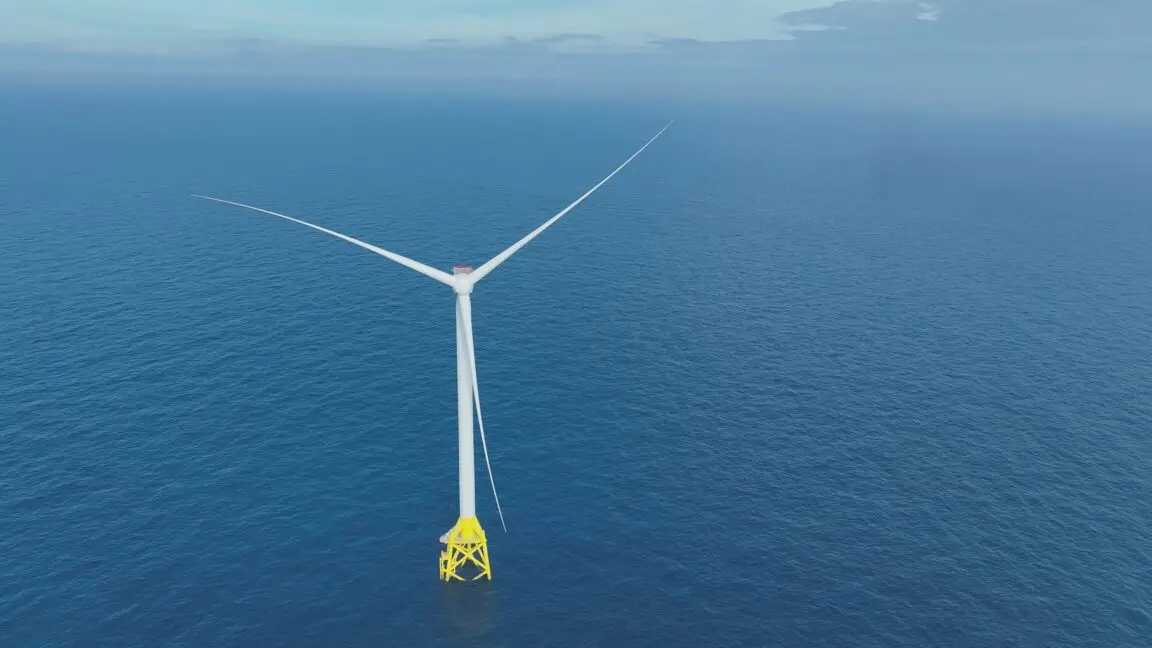
In a move that underscores its commitment to sustainability and energy independence, TSMC has signed a 30-year corporate power purchase agreement (PPA) for 100 percent of the power produced by the Hai Long offshore wind project. The deal, announced on April 30, involves Northland Power, a Canada-based global power producer, and covers more than 1 gigawatt (GW) of capacity across three offshore wind sites located off the western coast of central Taiwan in the Taiwan Strait. Once fully operational, the Hai Long project will have the capacity to power the equivalent of over one million Taiwanese households. The wind farms began feeding electricity into Taiwan’s grid in 2025 and are scheduled to reach full commercial operation by 2027.
The Energy Crunch That Spurred Action
TSMC’s bold move is a direct response to the energy shocks that have rattled Taiwan in recent years. The war in the Middle East disrupted regional energy production, most notably when Iranian drone strikes in March 2026 damaged Qatar’s natural gas facilities. Qatar subsequently shut down production, cutting off a critical supply of liquefied natural gas (LNG) to Taiwan. According to Bloomberg, Taiwan’s power grid lost one-third of its usual LNG supply almost overnight.
This was a dire situation because Taiwan relies on natural gas plants to generate roughly half of its electricity. Compounding the problem, the island typically holds only a two-week reserve of fuels. While the government has thus far managed to stave off blackouts by securing alternative suppliers—Australia and the United States stepped in to fill the gap, Reuters reported—the crisis made it painfully clear that long-term diversification is not optional.
During an energy forum on May 6, Taiwan’s vice minister of economic affairs stated that the government had secured enough oil and gas supplies to operate normally through August and possibly September, according to Taiwan News. Yet that is a temporary fix. The broader challenge is structural: Taiwan imports nearly 97 percent of its overall energy needs—including electricity, transport, and heating—according to the Global Taiwan Institute, a think tank based in Washington, D.C.
TSMC’s Outsized Role in Taiwan’s Energy Future
TSMC’s energy consumption is staggering—and growing. According to the International Energy Agency’s (IEA) report on energy and AI, the chipmaker’s facilities accounted for nearly 10 percent of Taiwan’s total electricity consumption in 2023. That share could balloon to nearly one-quarter of the nation’s overall electricity usage by 2030 as TSMC invests in even more energy-intensive manufacturing processes to meet global AI demand for advanced chips. S&P Global estimates, cited by Data Center Dynamics, project that TSMC’s energy needs will rise sharply with the expansion of its fabrication plants (fabs) for 3nm and 2nm process nodes.
To put that in perspective, the IEA notes that a single semiconductor fab can consume as much electricity as a small city. TSMC operates multiple mega-fabs, and its new facilities in Taichung, Hsinchu, and Kaohsiung are designed to run 24/7. This makes TSMC not just a beneficiary of the AI boom but also a key player in shaping Taiwan’s energy policy. When TSMC signs a PPA for offshore wind, it sends a powerful signal to developers, investors, and the government that renewable energy is a viable—and necessary—path forward.
TSMC has publicly committed to using renewable energy for 60 percent of its global operations by 2030 and 100 percent by 2040. The Hai Long agreement is a major step toward that goal. The chipmaker has also engaged in other large-scale renewable energy deals. In 2020, TSMC signed a PPA with Danish company Ørsted for 920 megawatts (MW) of power from the Greater Changhua offshore wind farm project, which is expected to become fully operational later in 2026. Additionally, in 2021, TSMC struck a deal with German renewable energy developer WPD to develop over 1 GW of onshore and offshore wind power. Collectively, these agreements already place TSMC among the world’s largest corporate buyers of renewable energy.
Taiwan’s Broader Renewable Energy Push
Taiwan’s government, under President Lai Ching-te, has we to accelerate efforts to diversify away from imported fossil fuels. In addition to building out renewable energy projects, the administration has explored restarting shuttered nuclear power plants—a contentious issue given the island’s location in a seismically active zone. However, the focus remains on offshore wind, which has become a centerpiece of Taiwan’s energy transition.
The government has set a target of making 15 GW of offshore wind capacity available to developers by 2035. This ambitious goal is intended to reduce reliance on natural gas and coal while fostering a domestic supply chain for wind turbine manufacturing and installation. Taiwan’s geography—with strong and consistent winds in the Taiwan Strait—makes it one of the best locations in Asia for offshore wind. The Hai Long project alone represents a significant chunk of that target, and other projects are in various stages of development.
Yet challenges remain. The global competition for wind turbine components, installation vessels, and skilled labor has driven up costs. Moreover, the political relationship with China adds a layer of complexity. Chinese state-owned enterprises have previously been involved in Taiwan’s offshore wind sector, but geopolitical tensions have led to stricter oversight. Nonetheless, Taiwan has managed to attract investment from European developers like Northland Power, Ørsted, and WPD, which bring expertise and capital.
The Intersection of AI, Chips, and Energy
The AI boom is not just about data centers and algorithms; it’s about hardware. Each advanced AI model requires thousands of specialized chips like NVIDIA’s H100 or B200, which are manufactured exclusively by TSMC (and to a lesser extent by Samsung). The energy required to produce these chips is immense. The chip manufacturing process involves hundreds of steps, each consuming large amounts of electricity and ultrapure water. The machines that etch nanoscale circuits onto silicon wafers—extreme ultraviolet (EUV) lithography tools—can each draw as much power as a small factory.
As AI models grow more sophisticated, the demand for TSMC’s most advanced nodes (such as 3nm and 2nm) skyrockets. TSMC is currently building new fabs in Arizona (USA) and Kumamoto (Japan), but the majority of its capacity remains in Taiwan. This concentration of chip production in a single country—especially one with energy vulnerabilities—has raised concerns among global tech companies that rely on TSMC for their AI hardware. Apple, AMD, NVIDIA, and Qualcomm all depend on TSMC for their chips. Any disruption to Taiwan’s power grid could have cascading effects on the global technology supply chain.
That is why TSMC’s investment in wind power is not just about corporate social responsibility or even cost savings; it is about risk mitigation. By helping to build a more resilient and diversified energy grid in Taiwan, TSMC is protecting its own operations and, by extension, the global semiconductor supply chain.
Historical Context: Taiwan’s Energy Dependence
Taiwan has historically been an energy island, relying almost entirely on imports of oil, coal, and natural gas. The island has few domestic energy resources of its own. It has some hydropower and a small amount of geothermal and solar, but these make up only a fraction of its energy mix. Nuclear power once accounted for about 10-12% of electricity generation, but public opposition after the Fukushima disaster in 2011 led to a policy of phasing out nuclear plants. The Kuomintang government reversed that policy, but the current administration under the Democratic Progressive Party (DPP) is divided on the issue. Restarting nuclear plants remains politically sensitive.
The energy crunch of 2026-2027 has forced a reckoning. Taiwan’s strategic petroleum reserve is modest, and the country is particularly vulnerable to disruptions in maritime shipping lanes. The Strait of Hormuz, through which much of the world’s LNG passes, is a chokepoint. When shipping was effectively halted due to the conflict, the impact on Taiwan was immediate.
The government has since accelerated approvals for new offshore wind projects and streamlined permitting processes. It has also offered financial incentives for companies like TSMC to enter into long-term PPAs, which help developers secure financing for these capital-intensive projects. The result is a virtuous cycle: TSMC’s commitment to buying wind power gives developers the revenue certainty they need to build more wind farms, which in turn helps the grid accommodate more renewable energy.
Technical Details of the Hai Long Project
The Hai Long offshore wind project consists of three separate sites: Hai Long 2, Hai Long 3, and Hai Long (the original site). Together, they will have a total installed capacity of over 1 GW. The turbines are being supplied by Vestas, a Danish manufacturer, and are among the largest offshore wind turbines in the world, with a capacity of 15 MW each. The project is being developed by a consortium led by Northland Power, with support from Japanese and Taiwanese partners. The construction is phased, with the first turbines becoming operational in 2025. By 2027, all three sites are expected to be fully operational, generating enough electricity to power over one million homes or, equivalently, provide a significant portion of TSMC’s growing energy needs.
The 30-year duration of the PPA is noteworthy. Typical corporate PPAs for renewable energy range from 10 to 20 years. The longer term reflects TSMC’s confidence in the stability of the Taiwanese regulatory environment and its long-term commitment to renewable energy. It also reflects the high capital costs of offshore wind—developers need long-term revenue contracts to secure financing.
Comparison with Other Corporate Renewable Energy Buyers
TSMC is not alone in its renewable energy push. Globally, tech giants like Google, Amazon, Microsoft, and Meta have all committed to 24/7 carbon-free energy and have signed massive PPAs. Google, for instance, has contracts for over 20 GW of renewable energy worldwide. However, TSMC’s case is unique because it is not a data center operator but a manufacturer. The energy intensity of chip fabrication greatly exceeds that of a typical office building or even a large data center. TSMC’s fabs run around the clock, and any disruption can ruin an entire batch of wafers worth millions of dollars.
In Taiwan, TSMC’s scale means that its renewable energy purchases have an outsized impact. According to estimates, TSMC’s existing PPAs with Ørsted and Northland Power already cover a significant fraction of the island’s installed offshore wind capacity. As more projects come online, TSMC could become the single largest consumer of renewable energy in Taiwan.
The company’s goal of 100% renewable energy by 2040 is ambitious. Achieving it will require not only wind power but also solar, battery storage, and possibly even green hydrogen. TSMC has invested in energy storage systems at its fabs to smooth out the intermittency of renewable sources.
In conclusion, TSMC’s pact for Hai Long offshore wind power is a strategic maneuver that addresses both corporate sustainability targets and the urgent need for energy security in Taiwan. The AI boom may be driving record profits for the chipmaker, but it is also forcing a reimagining of Taiwan’s entire energy landscape. As the island walks a tightrope between fossil fuel dependence and renewable ambitions, TSMC’s role as both a driver and a solution is set to deepen. The coming years will test whether Taiwan can keep the lights on for its most valuable industry while building a cleaner, more resilient grid.
Source: Ars Technica News