

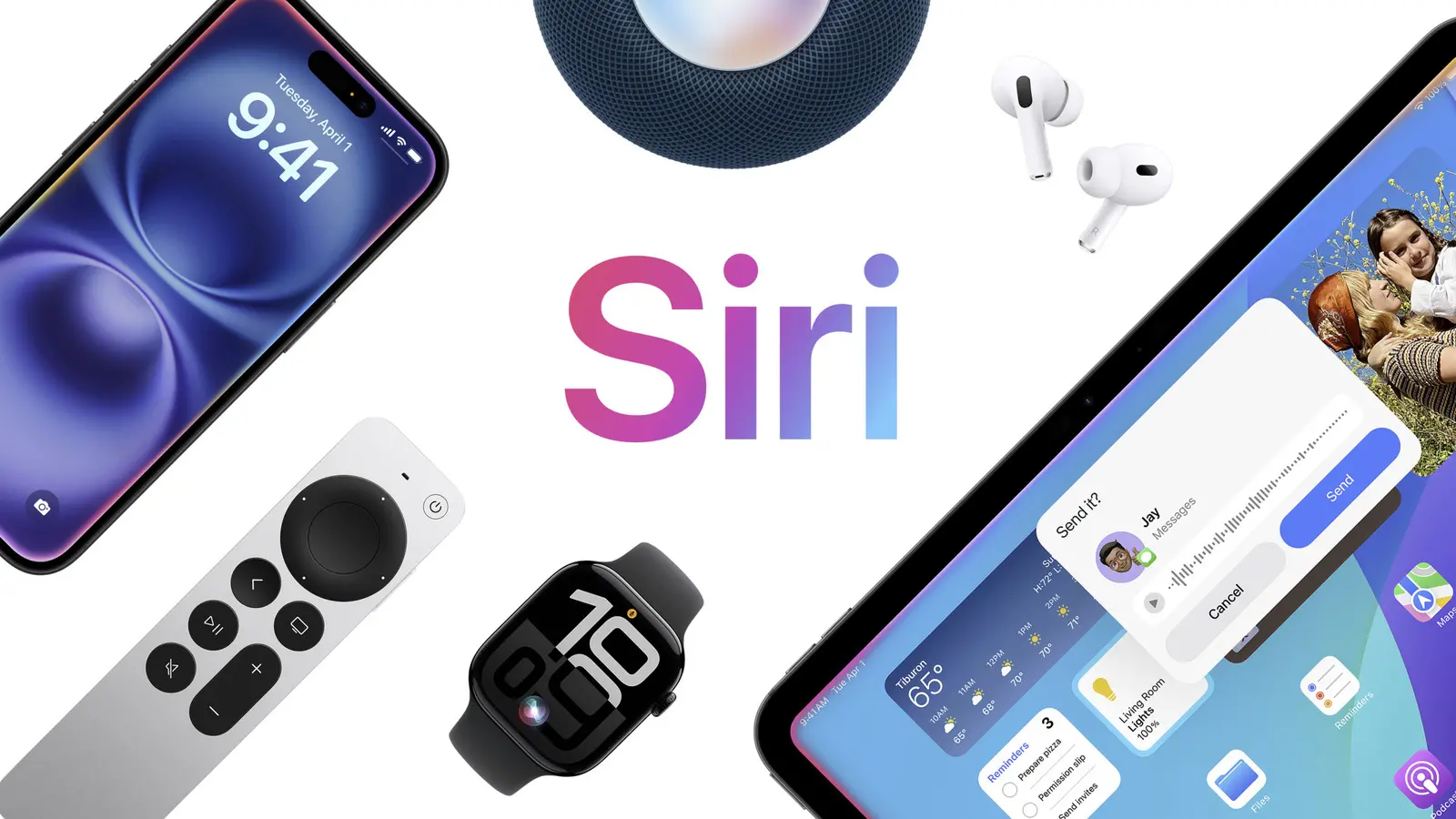
Apple has agreed to pay $250 million to settle a class action lawsuit that alleges the company deceived U.S. consumers by promoting an AI-powered version of Siri that never materialized. According to the settlement, which awaits judicial approval, the funds will be distributed to buyers of the iPhone 16 series and iPhone 15 Pro models who anticipated receiving the upgraded virtual assistant. The agreement, however, does not require Apple to admit any wrongdoing—a common feature in many large corporate settlements.
The lawsuit centered on Apple’s demonstration of a more personalized and contextually aware Siri at the Worldwide Developers Conference (WWDC) in 2024. During that keynote, Apple announced that the new Siri would be part of its broader Apple Intelligence initiative, a suite of generative AI features designed to enhance user productivity and creativity. The company claimed the enhanced assistant would understand the context of what was on a user’s device and take actions within apps on their behalf. These capabilities were expected to arrive alongside the iPhone 16 lineup in fall 2024.
Yet, nearly two years later, that version of Siri has not shipped. Apple did roll out components of Apple Intelligence incrementally throughout 2024 and 2025, including text editing tools, image generation, and integration with ChatGPT. But the promised Siri upgrade—the centerpiece of the AI push—repeatedly slipped. The company did not publicly acknowledge the delay until March 2025, more than five months after the iPhone 16 went on sale, a phone that was marketed as being purpose-built for Apple Intelligence. By then, advertisements showcasing the new Siri had already been pulled from circulation.
The long shadow of Siri’s past
Siri has had a fraught history since Apple acquired the technology in 2010 and launched it on the iPhone 4S in 2011. Initially hailed as a breakthrough in consumer voice assistants, Siri quickly fell behind competitors such as Amazon’s Alexa, Google Assistant, and later, large language models like ChatGPT. Apple’s reluctance to compromise on user privacy—a core brand principle—limited the data the assistant could access, constraining its ability to learn and improve. Meanwhile, rivals levered vast cloud resources and user data to create more responsive and context-aware assistants.
By 2023, Apple’s AI efforts were widely seen as lagging. The company’s internal struggles to develop generative AI models that could run efficiently on-device without compromising privacy were reported extensively. The Apple Intelligence announcement at WWDC 2024 was intended to signal a major shift. It promised features like on-device processing, private cloud computing, and a new Siri that could read your screen, understand your calendar, and interact with third-party apps. These were exactly the types of capabilities that could reignite interest in Siri.
Misleading marketing and consumer trust
The class action lawsuit argued that Apple’s marketing for the iPhone 16 was deceptive. Television ads, online commercials, and in-store demonstrations prominently featured the Siri upgrade, leading consumers to believe the feature was imminent or even available at launch. For many buyers, the promise of a smarter Siri was a decisive factor in upgrading to the then-expensive iPhone 16 or the iPhone 15 Pro—models that were equipped with the necessary neural engine for Apple Intelligence. The suit claimed that Apple knew or should have known that the development was behind schedule, yet continued to run the ads and sell devices based on those promises.
Apple’s response—the $250 million settlement—provides financial redress but dodges a formal admission of fault. The proposed class covers U.S. purchasers of the iPhone 16 family and iPhone 15 Pro models. Each eligible device owner could receive a portion of the fund, though exact amounts per person are not yet specified. Notably, the settlement does not include any requirement for Apple to deliver the promised Siri update by a specific date, nor does it order the company to change its marketing practices.
The Google Gemini partnership
After months of silence and private development, Apple revealed that it had partnered with Google to accelerate the creation of a true next-generation Siri. The company will integrate Google’s Gemini models into the assistant, giving it the ability to understand complex requests, maintain conversational context, and perform multi-step tasks across apps. This represents a pragmatic shift for Apple, which had long championed its homegrown technology and privacy-first approach. Licensing an external model—especially from a rival known for data collection—was seen by analysts as a tacit admission that in-house efforts had not kept pace.
The new Siri, built on Gemini, will reportedly be included in iOS 27, expected in late 2026 or early 2027. The update is said to bring a redesigned user interface, faster responses, and deep integration with Apple’s productivity apps. It will also maintain privacy by processing many requests on-device and anonymizing data sent to Google’s cloud. Apple has stressed that the partnership is limited in scope and that its own machine learning teams remain heavily involved.
Implications for Apple’s brand and strategy
The lawsuit and settlement come at a sensitive time for Apple. While the company remains immensely profitable, its reputation for innovation has faced steady erosion. Competitors have launched generative AI features that redefine user expectations; Samsung’s Galaxy AI, for instance, offers real-time translation, photo editing, and summarization tools that are already widely available. Apple’s delayed Siri upgrade, and the legal fallout from its promotion, underscore the challenges of marrying cutting-edge AI with the tight security and control Apple exerts over its ecosystem.
Financially, $250 million is a relatively small sum for a company with over $60 billion in quarterly revenue. But the reputational cost could be higher. The class action has drawn attention to what critics call Apple’s “vaporware” marketing—promising features that fail to arrive. This is not the first time Apple has faced such accusations; the company previously settled a lawsuit over slow iPhone performance and has been criticized for overly ambitious promises with its AirPower charging mat, which was eventually canceled.
The settlement also highlights the growing legal scrutiny of AI feature announcements. As more tech giants rush to advertise capabilities still in development, consumer protection laws are being tested. Regulators are taking note of how companies market “coming soon” AI features to drive hardware sales. The Apple case may set a precedent: if you sell a phone based on an AI feature that never ships, you may have to compensate buyers.
For now, Apple has avoided a lengthy court battle that could have exposed internal communications about the Siri delay. The settlement allows the company to move forward and focus on delivering the updated assistant with iOS 27. Whether the new Siri, powered by Gemini, can live up to the original vision—or even meet the expectations set in 2024—remains an open question. Early developer reports suggest that the integration is still in flux, and Apple has not committed to a hard launch date beyond listing it among upcoming iOS features. The company has also not announced whether older devices, such as the iPhone 15 Pro, will support all new Siri capabilities or if certain functions require upcoming hardware.
The road to a truly intelligent, context-aware Siri has been long and costly. Apple’s $250 million settlement buys time and silence, but it does not buy back the trust of every customer who upgraded their phone based on a promise yet to be fulfilled.
Source: Engadget News