

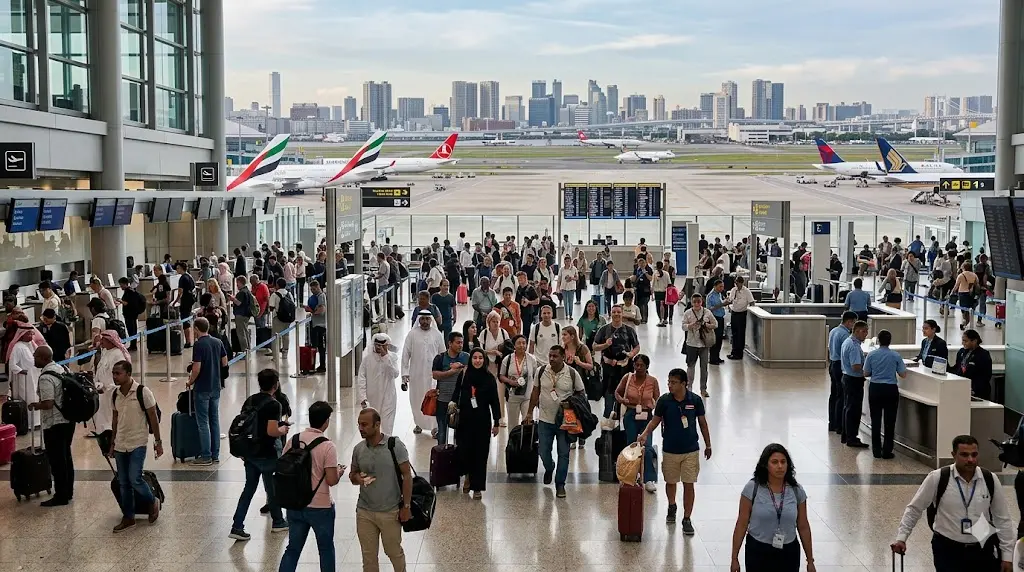
Global migration is quietly reshaping how tourism works, who travels, and even why people travel in the first place. If you look closely, you’ll notice it’s not just about tourists anymore—it’s about people moving, settling, visiting family, and building cross-border lives that blend migration with travel.
Here’s the simple truth: global migration is expanding tourism demand in unexpected ways while also changing travel patterns, destinations, and spending behavior. The global tourism industry is adapting fast, sometimes smoothly and sometimes awkwardly, to keep up with these shifts.
Global migration is reshaping the tourism industry by creating new travel flows, especially diaspora and family-based travel. It’s also influencing destination popularity, seasonal demand, and cultural tourism. In most cases, tourism is no longer purely recreational—it’s becoming deeply tied to migration networks, identity, and long-term mobility patterns.
What Is Global Migration and Tourism Industry Impact?
Global migration and tourism industry impact refers to how cross-border population movement influences travel behavior, destination demand, and the structure of the tourism economy.
In plain terms, when people move from one country to another, they don’t just stop traveling—they change how, where, and why tourism happens. Friends and family visits increase, return trips become frequent, and new cultural connections shape travel preferences.
What most people overlook is this: migration doesn’t just send people out of a country—it creates constant travel corridors between origin and destination countries. And those corridors often become some of the most stable revenue streams for tourism industries.
In my experience, tourism boards underestimate this link. They chase “leisure tourists” while missing the steady, predictable flow of diaspora travelers who return multiple times a year.
Definition Box
Diaspora Tourism: Travel driven by migrants and their descendants returning to their country of origin to visit family, heritage sites, or cultural roots.
Why Global Migration and Tourism Industry Impact Matters in 2026
Let me be direct—2026 is not behaving like earlier travel years. Migration patterns have become more complex, and that complexity is feeding directly into tourism growth.
We’re seeing three major shifts:
First, migrant populations are becoming long-term repeat travelers rather than one-time movers. That creates stable tourism demand.
Second, second-generation migrants are traveling more frequently to explore identity-based tourism, not just family visits.
Third, destinations are actively redesigning tourism strategies to attract diaspora spending.
Here’s the thing: tourism used to be seasonal and discretionary. Now it’s structural. Migration has turned it into something more predictable in certain corridors.
From what I’ve seen, countries that actively engage their diaspora communities tend to outperform others in tourism recovery cycles. It’s not flashy, but it works.
How Global Migration Is Reshaping Tourism Step by Step
Understanding this transformation becomes clearer when you break it down.
Step 1: Migration creates long-term travel corridors
When people move abroad, they don’t cut ties—they maintain consistent travel links with their home country. These corridors often become the backbone of airline routes and travel packages.
Step 2: Family and return visits become the dominant travel type
Instead of random tourism, a large share of travel becomes predictable family-based movement. Holidays, weddings, and cultural festivals drive spikes in demand.
Step 3: Destinations adapt to diaspora expectations
Tourism boards start tailoring experiences for returning migrants—food familiarity, language support, cultural experiences that feel “both local and global.”
Step 4: Spending patterns shift dramatically
Migrants often spend more per trip than average tourists because visits are emotionally driven and time-limited.
Step 5: New hybrid tourism categories emerge
We now see mixed-purpose travel: work + family visits, education + tourism, or migration + exploration trips. The boundaries are getting blurry.
Step 6: Airlines and hospitality adjust pricing and services
Flexible booking, long-stay packages, and multi-stop flights become more common as migration-linked travel grows.
Common Misconception: Migration Reduces Tourism
This is where most discussions get it wrong.
A common assumption is that when people migrate, they stop contributing to tourism in their home country. That’s only half the story.
The counterintuitive reality is that migration often increases tourism flows in both directions. Migrants visit home regularly, and they also bring relatives and friends with them when they return. In many cases, they become “super-travelers” compared to typical tourists.
I’ve seen cases where one migrant household generates five to ten tourism trips per year across borders. That’s not a small ripple—that’s a structural shift.
Expert Tip: Tourism Boards Should Think in Networks, Not Visitors
If you’re in tourism planning, stop thinking of travelers as isolated individuals. Start thinking in networks—families, diaspora groups, and migration-linked communities.
The countries that win in this space are the ones that map emotional and cultural connections, not just flight arrivals. It sounds soft, but it directly impacts revenue cycles and destination loyalty.
Why Migration Is Quietly Becoming the Biggest Tourism Driver
Here’s something most people overlook: migration is now a bigger long-term driver of tourism stability than seasonal marketing campaigns.
Tourists come and go. Migration networks persist for decades.
These networks create:
Repeat visitation cycles
Predictable seasonal spikes
Strong emotional destination attachment
Higher per-trip spending behavior
From a practical standpoint, tourism industries that ignore migration trends are basically planning blind.
Real-World Mini Case Study
Take a typical scenario: a family moves from South Asia to Europe. At first, travel back home happens once every few years. But over time, patterns shift.
The parents travel annually. Children start visiting during school breaks. Eventually, extended family members from both sides begin alternating visits. Tourism doesn’t just recover—it multiplies.
What’s interesting is that travel agencies in both regions start building packages specifically around these migration-linked schedules. It becomes a predictable revenue stream, not a seasonal gamble.
Expert Tip: Emotional Value Is Now a Tourism Currency
One thing I’ve learned the hard way: emotional motivation often outperforms price sensitivity in migration-driven tourism.
People don’t always choose the cheapest route when visiting family. They choose convenience, timing, and emotional comfort. That changes how pricing models should work in airlines and hospitality.
Unexpected Twist: Migration Is Also Creating “Reverse Tourism”
Here’s a less obvious shift.
Some migrants are now exploring their host countries as tourists after initially moving there for work or study. They start visiting nearby cities, cultural sites, and domestic attractions they previously ignored.
So migration doesn’t just export tourism demand—it also internalizes it within destination countries. That dual effect is reshaping how domestic tourism markets behave.
Expert Tips: What Actually Works in This New Tourism Reality
In most cases, tourism strategies that succeed in migration-heavy contexts do three things well.
They personalize communication for diaspora audiences instead of treating them like generic tourists. They align promotions with cultural calendars like festivals, weddings, and academic breaks. And they build long-term engagement rather than one-off campaigns.
Let me be honest—many tourism boards still rely too heavily on mass marketing. That approach is slowly losing effectiveness in migration-influenced markets.
People Most Asked About Global Migration and Tourism Industry Impact
How does migration affect international tourism demand?
Migration increases travel demand through family visits, cultural trips, and repeat travel patterns. It creates stable and predictable tourism flows between countries.
Why is diaspora tourism becoming so important?
Diaspora tourism is growing because migrants maintain strong emotional and family ties to their home countries, leading to frequent and meaningful travel.
Does migration reduce leisure tourism?
Not really. It often reshapes it rather than reducing it. Leisure tourism may shift toward migrant destination countries or blend with family travel.
Which industries benefit most from migration-driven tourism?
Airlines, hospitality, travel agencies, and local tourism services benefit most due to consistent repeat travel and higher spending patterns.
What is the biggest challenge for tourism industries today?
The biggest challenge is adapting traditional tourism models to account for migration-linked travel behavior, which is less seasonal and more network-driven.
Promotional Paragraph
Our network site provides powerful solutions for businesses seeking guest posting services, press release distribution services, and PR submission sites that strengthen online press release distribution strategies. By leveraging platforms like press release distribution services and digital marketing services, brands can secure high authority backlinks, boost SEO ranking, and expand brand visibility through targeted media coverage. This approach supports organic traffic growth and instant publishing across global newswire services and digital marketing services, making it ideal for companies aiming to scale their digital marketing agency presence effectively.