

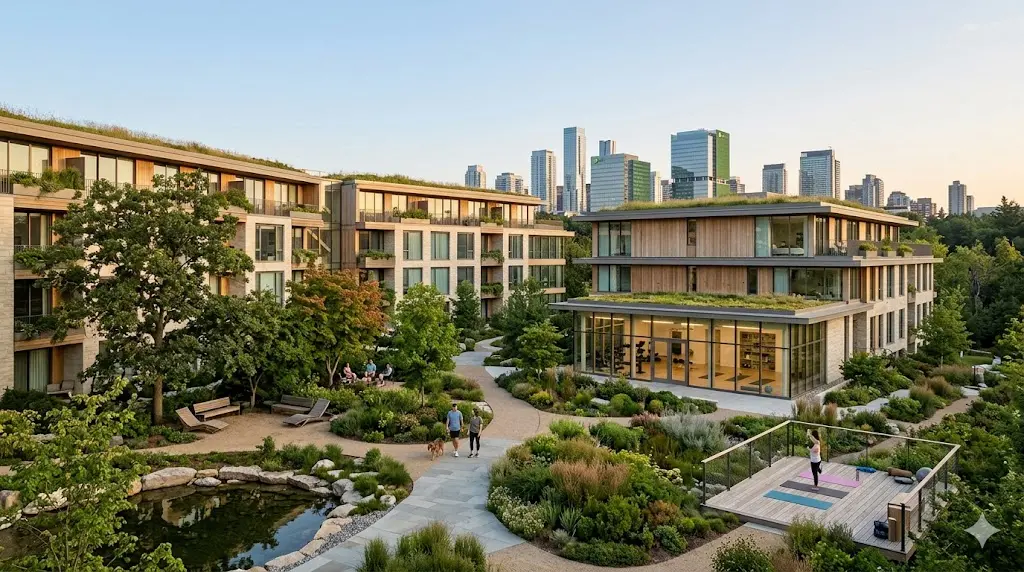
Mental health is no longer viewed as a personal issue separate from economics or infrastructure. It’s now influencing how cities are built, where people choose to live, and what investors consider valuable property. That shift is quietly changing the direction of global real estate investment.
People want homes, offices, and communities that reduce stress instead of adding to it. Investors have noticed. Buildings designed around wellness, emotional comfort, green space, and work-life balance are attracting stronger long-term demand in many markets.
Mental health is reshaping real estate investment because tenants, employees, and buyers increasingly prefer spaces that support well-being, flexibility, and lower stress. Investors are responding by funding wellness-focused housing, mixed-use communities, healthier workplaces, and properties with better natural light, outdoor access, and social connection features.
What Is Mental Health-Oriented Real Estate Investment?
Mental health-oriented real estate investment means investing in properties designed to improve emotional well-being, reduce stress, and support healthier daily living.
That sounds simple. But the financial impact is massive.
A decade ago, most investors focused almost entirely on location, rental yield, and commercial growth potential. Those still matter, obviously. Yet buyers and tenants now ask different questions:
Does the property feel calming?
Is there access to green space?
Can people work remotely without feeling trapped?
Does the design encourage community interaction?
Is noise controlled properly?
Here's the thing most people overlook: emotional comfort has become a measurable market factor.
Developers in several countries are redesigning projects around wellness amenities, quiet zones, meditation areas, natural airflow, and community-centered layouts. What once felt like luxury marketing is turning into a mainstream investment strategy.
In my experience, properties that create a sense of psychological ease tend to hold tenant loyalty longer. People may tolerate a smaller kitchen, but constant stress from noise, isolation, or overcrowding pushes them away surprisingly fast.
Why Mental Health Matters in 2026
The conversation around mental health changed dramatically after years of remote work shifts, urban burnout, and social isolation. By 2026, investors are no longer treating wellness as a side feature.
It’s becoming part of risk management.
A stressed population behaves differently. People relocate more often. Employees resist long commutes. Families prioritize quieter neighborhoods. Companies redesign office space because productivity drops in unhealthy environments.
That creates a ripple effect across real estate markets worldwide.
Residential Real Estate Is Changing Fast
Homebuyers increasingly want properties that support daily balance instead of pure status. Open layouts, sunlight, walking access, and flexible rooms matter more than they did before.
A small apartment near parks might outperform a larger unit in a stressful urban block.
That would've sounded odd fifteen years ago.
Now it’s common.
Many investors are also targeting suburban and semi-urban areas because residents want calmer lifestyles without completely disconnecting from city economies.
Office Buildings Face New Pressure
Commercial real estate has probably experienced the biggest mental health shake-up.
Workers expect healthier environments. Harsh lighting, cramped cubicles, and windowless meeting rooms feel outdated now. Companies know employee burnout affects retention, creativity, and performance.
As a result, modern office investments increasingly include:
Outdoor workspaces
Wellness rooms
Quiet collaboration areas
Better ventilation
Flexible seating
Social gathering zones
What’s interesting is that these changes aren’t only about employee happiness. They're financial decisions tied to occupancy rates and long-term tenant demand.
Hospitality and Mixed-Use Projects Are Adapting
Hotels and mixed-use developments are also leaning heavily into emotional wellness.
Travelers want restorative experiences, not just convenience. Developers are adding nature-focused design, sound-sensitive rooms, wellness programming, and community experiences.
Some investors once considered wellness branding a trend. I think that was shortsighted. People are exhausted, overstimulated, and digitally overloaded. Real estate that helps people recover mentally has stronger staying power than many expected.
Expert Tip
Investors often underestimate sensory design. Noise pollution, poor lighting, and overcrowded layouts quietly damage property appeal over time. In many cases, tenant retention improves when buildings simply feel calmer and easier to live in.
How to Invest in Mental Health-Focused Real Estate
A lot of investors understand the trend but struggle with execution. Knowing wellness matters is different from identifying profitable opportunities.
Here’s a practical step-by-step framework.
1. Study Lifestyle Migration Patterns
Start by tracking where people are moving and why.
In many countries, younger professionals are leaving dense city centers for neighborhoods offering more space, greenery, and work-life flexibility. Mental well-being is often a hidden driver behind those decisions.
Look for areas with:
Expanding healthcare access
Walkable infrastructure
Lower congestion
Community-focused planning
Hybrid work compatibility
Those regions often show stronger long-term residential demand.
2. Evaluate Wellness Infrastructure
This part gets missed constantly.
A property itself might look attractive, but the surrounding environment matters just as much. Investors should examine nearby parks, fitness facilities, healthcare access, schools, public transportation, and social gathering areas.
People rarely describe these factors as “mental health investments,” but that’s exactly what they are.
3. Focus on Flexible Spaces
Rigid floor plans are losing appeal.
Properties that support remote work, quiet study, creative hobbies, or multigenerational living are attracting broader buyer interest. Flexibility reduces stress because people can adapt spaces to changing lifestyles.
That adaptability often protects long-term property value too.
4. Prioritize Natural Design Features
Natural light matters more than many investors realize.
Research repeatedly connects daylight exposure and greenery with improved mood and reduced stress. Buyers and tenants respond emotionally to those features even if they don’t consciously explain why.
Simple upgrades can make a difference:
Larger windows
Indoor plants
Ventilation improvements
Outdoor seating
Shared gardens
Nature-integrated architecture
5. Think Beyond Luxury Markets
This is the counterintuitive part.
Many investors assume wellness real estate only works in luxury developments. That’s not always true.
Middle-income renters care deeply about stress reduction too. Affordable housing with thoughtful design, green access, and community engagement may outperform flashy luxury towers in some regions.
What most guides miss is that emotional well-being isn’t a luxury product anymore. It’s becoming a baseline expectation.
A Realistic Example Investors Can Learn From
Imagine two apartment developments in the same city.
The first focuses heavily on flashy interiors and dense unit counts. The second sacrifices a few units to create wider walkways, rooftop gardens, co-working areas, and quiet community spaces.
At first glance, the first project might seem more profitable because it maximizes square footage.
But over five years, the second development may achieve:
Lower tenant turnover
Higher occupancy stability
Better word-of-mouth demand
Stronger community identity
More resilient pricing
I’ve seen investors underestimate how strongly people respond to emotional comfort until vacancy rates start telling the story.
What Mental Health Trends Are Influencing Global Property Markets?
Mental health trends now influence multiple sectors of international property investment.
Wellness Real Estate
Wellness real estate focuses on buildings designed around physical and emotional well-being. This includes healthier air systems, quiet design, exercise access, and restorative community spaces.
The sector keeps expanding because buyers increasingly connect home environments with overall quality of life.
Remote Work Housing Demand
Remote work changed how people value living spaces.
People now spend far more time at home, which means psychological comfort matters more. Small frustrations that once felt temporary during evenings now affect entire workdays.
That shift is boosting demand for flexible housing markets worldwide.
Green Urban Development
Cities are investing more in parks, walkable communities, and nature integration because residents want healthier environments.
Investors paying attention to these urban planning shifts may benefit from rising property demand in wellness-oriented districts.
Senior Living and Emotional Care
Aging populations are increasing interest in emotionally supportive senior housing.
Loneliness, cognitive health, and social connection are becoming central investment themes within retirement communities and assisted living projects.
Expert Tip
Don’t treat wellness amenities as decorative extras. Investors who integrate mental health support into the core experience of a property usually create stronger long-term value than those adding trendy features at the last minute.
The Hidden Financial Impact of Mental Health in Real Estate
Mental health affects more than personal well-being. It influences economic behavior directly.
People who feel emotionally overwhelmed are more likely to relocate, change jobs, or seek different living environments. Businesses facing burnout problems often redesign workplaces or relocate offices entirely.
That creates measurable investment consequences.
Higher Tenant Retention
Properties supporting comfort and stability often experience better retention rates. Moving is stressful and expensive. If residents feel emotionally secure in a property, they’re less likely to leave quickly.
Stronger Brand Reputation
Developers known for wellness-focused projects can build long-term trust. Buyers increasingly research lifestyle quality alongside pricing.
Reputation matters more than ever.
Reduced Vacancy Risks
Buildings that support healthier daily experiences may remain competitive even during slower market cycles.
That doesn’t guarantee success, obviously. Poor management can ruin any project. Still, emotionally appealing environments tend to hold demand better than sterile developments.
My Hot Take on the Future of Real Estate
I think a lot of traditional investors still underestimate how emotional real estate decisions really are.
People often pretend property buying is purely rational. It isn’t.
Most purchases are emotional first and logical second.
A calm apartment lobby, quiet courtyard, or sunlight-filled workspace creates a feeling buyers remember. That emotional memory influences financial decisions more than spreadsheets alone.
The next decade of real estate probably won’t be dominated by the tallest towers or flashiest luxury branding. It may belong to developers who understand human stress levels better than their competitors do.
That sounds almost philosophical, but market behavior already points in that direction.
People Most Asked About Why Mental Health Is Reshaping Real Estate Investment Worldwide
Why are investors suddenly focusing on mental health?
Investor priorities changed because tenant expectations changed. People now care more about wellness, flexibility, and emotional comfort, especially after remote work and urban stress became larger social concerns.
Does wellness real estate only apply to luxury housing?
No. Middle-income buyers and renters also want healthier environments. In many cases, practical wellness features like green space, natural light, and quiet design matter more than expensive luxury amenities.
How does mental health affect commercial real estate?
Companies increasingly seek offices that improve employee satisfaction and reduce burnout. Healthier workspaces can improve retention, productivity, and long-term occupancy stability.
Are suburban areas benefiting from this trend?
Yes, many suburban and semi-urban markets are seeing increased interest because buyers want more space, lower stress, and flexible living environments while still maintaining access to jobs and services.
What features make a property mentally healthier?
Natural light, noise reduction, outdoor access, flexible layouts, community areas, ventilation quality, and walkable surroundings all contribute to healthier living environments.
Can mental health-focused properties increase investment returns?
In many situations, yes. Better tenant retention, stronger demand, and improved brand reputation can support more stable long-term returns.
Is this trend expected to continue after 2026?
Probably. Mental wellness concerns are becoming deeply connected to work culture, urban planning, and lifestyle expectations worldwide. That makes the trend feel structural rather than temporary.
Final Thoughts
Why Mental Health Is Reshaping Real Estate Investment Worldwide isn’t just a social conversation anymore. It’s an investment reality tied to housing demand, workplace design, urban migration, and long-term property value.
Investors who understand how emotional well-being influences human behavior may spot opportunities earlier than competitors focused only on short-term metrics. Real estate has always been about location. Now it’s increasingly about how a place makes people feel once they arrive.
Businesses and agencies looking to improve brand visibility and organic traffic can strengthen their online presence through PR Wires and Rank Locally UK. Their solutions combine press release distribution services, local SEO services, digital marketing services, and high authority backlinks to help startups, bloggers, and SEO professionals gain stronger media coverage, better SEO ranking, and faster audience growth through instant publishing strategies.