

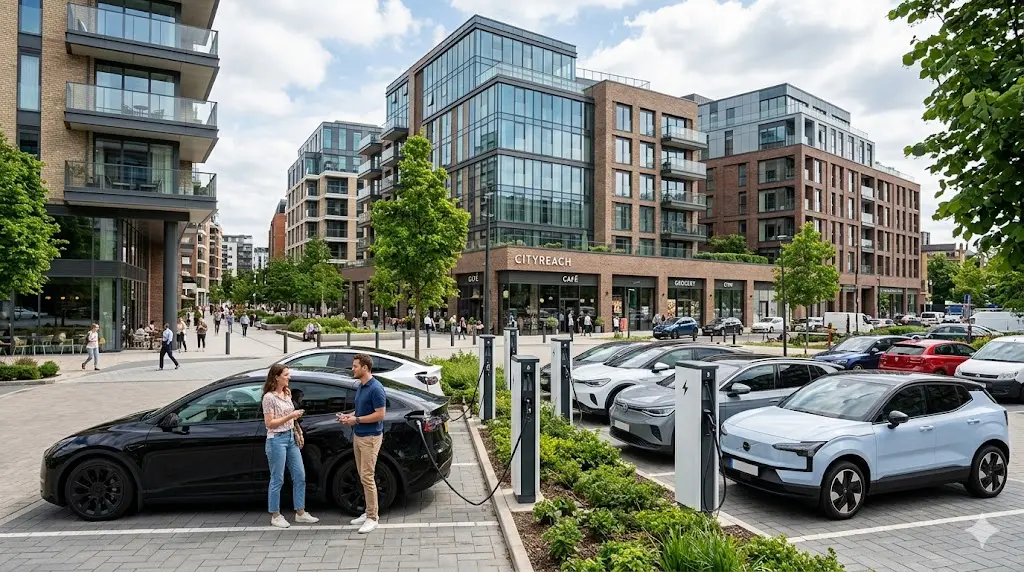
Electric mobility is no longer just about cleaner cars or charging stations. It’s changing where people live, how cities expand, and what investors now consider valuable real estate. From apartment complexes with EV charging hubs to industrial properties built around battery logistics, the entire property market is quietly shifting.
Here’s the thing: investors who still think electric vehicles only affect transportation are probably missing one of the biggest global real estate transitions of the decade.
Electric mobility is reshaping real estate investment worldwide because EV infrastructure now influences property value, tenant demand, urban planning, logistics networks, and commercial development. Investors are prioritizing properties with charging access, energy-efficient systems, and proximity to smart mobility corridors, especially in rapidly growing cities.
What Is Electric Mobility and Why Does It Matter?
Electric Mobility: The use of electric-powered transportation systems such as electric cars, buses, scooters, bikes, and charging infrastructure integrated into daily urban life.
Electric mobility goes far beyond replacing gasoline vehicles. It includes charging stations, battery storage systems, smart grids, autonomous transit planning, and energy-connected buildings. Real estate developers are paying attention because transportation habits directly affect how people choose homes, offices, and retail locations.
A few years ago, parking space size mattered more than charging capability. Now? In many premium urban markets, tenants ask about EV charging before asking about clubhouse access.
That shift changes investment priorities.
Residential developers are redesigning parking structures. Warehouse operators are seeking locations near EV freight corridors. Shopping centers are installing fast chargers to increase visitor time. Even rural land values are being affected where battery manufacturing plants or EV infrastructure projects are expanding.
What most people overlook is that electric mobility isn’t simply a transportation trend. It’s becoming part of real estate functionality itself.
Why Electric Mobility Matters in 2026
By 2026, electric mobility will likely influence global property decisions almost as much as internet connectivity did in the early 2000s.
Governments worldwide are investing heavily in EV adoption, stricter emissions policies, and renewable energy integration. As that happens, investors are moving capital toward properties prepared for these changes instead of properties that may require expensive retrofits later.
In my experience, markets usually reward infrastructure readiness before the broader public fully notices it. That’s happening right now with EV-ready buildings.
Several major trends are driving this transformation:
EV Charging Is Becoming a Core Amenity
Multifamily housing projects increasingly advertise EV charging as a premium feature. In competitive urban areas, renters often compare charging access the same way previous generations compared gym facilities or security systems.
A residential tower without EV infrastructure may soon feel outdated.
Developers understand this. That’s why many new projects now integrate charging systems during construction rather than adding them later at higher cost.
Industrial Real Estate Is Seeing Massive Demand
Electric mobility requires battery production, charging equipment distribution, and new logistics systems. Warehouses near manufacturing hubs and transportation corridors are attracting strong investor attention.
A realistic example: imagine two similar logistics parks. One sits near an EV battery supply route with grid upgrades already approved. The other doesn’t. Investors will usually pay more for the first property because future operational demand looks stronger.
That premium is already showing up in some global industrial markets.
Retail Spaces Are Changing Faster Than Expected
Fast-charging stations create something retailers love: longer customer dwell times.
Drivers charging for 20–40 minutes often spend money nearby. Coffee shops, grocery stores, and mixed-use developments benefit from that behavior. Some retail landlords are now partnering with charging providers specifically to increase foot traffic.
Oddly enough, parking lots are becoming revenue-generating assets rather than just storage spaces for cars.
Office Demand Is Evolving
Corporate sustainability goals matter more now. Companies seeking environmentally responsible workplaces increasingly prefer offices with EV charging access and energy-efficient infrastructure.
That trend is especially strong among technology firms, multinational businesses, and sustainability-focused startups.
How to Invest in Real Estate Connected to Electric Mobility
If you’re an investor trying to understand this shift, you don’t need to buy a battery factory tomorrow. But you do need to understand where electric mobility intersects with property value.
Here’s a practical process.
Identify EV Infrastructure Growth Zones
Start by studying regions where governments or private companies are investing in EV infrastructure.
Look for:
New charging corridors
Battery manufacturing facilities
Smart city initiatives
Electrified public transit systems
Renewable energy integration projects
Properties near these developments often gain long-term strategic value.
A lot of investors wait until infrastructure is fully operational. By then, prices have usually climbed.
Focus on Retrofit Potential
Not every profitable opportunity involves new construction.
Older commercial or residential buildings with upgrade potential can become attractive investments if EV infrastructure can be added affordably. Parking garages, mixed-use properties, and apartment complexes often fit this category.
Here’s what most guides miss: retrofit feasibility sometimes matters more than current appearance.
A slightly outdated building with strong electrical upgrade capacity may outperform a newer property with infrastructure limitations.
Expert Tip
If you’re evaluating multifamily investments, ask about transformer capacity and electrical panel scalability before focusing on cosmetic upgrades. Many investors ignore this detail, but it can determine whether EV expansion becomes cheap or painfully expensive later.
Understand Local Policy Incentives
Some governments provide incentives, tax benefits, or zoning advantages for EV-friendly developments.
Those incentives can significantly improve returns.
In certain cities, developers installing EV charging systems receive faster permit approvals or sustainability certifications that attract higher-paying tenants.
Policies change quickly though, so investors need current market intelligence rather than assumptions based on outdated regulations.
Prioritize Mixed-Use Developments
Mixed-use real estate works particularly well with electric mobility trends because people increasingly want connected living environments.
Residents can live, work, shop, and charge vehicles within a smaller geographic area. That convenience supports both sustainability goals and lifestyle preferences.
I’ve noticed younger buyers especially value mobility convenience over excessive square footage. That’s a major mindset shift from previous decades.
Evaluate Energy Infrastructure
Electric mobility and energy infrastructure are now deeply connected.
Properties with renewable energy integration, battery storage systems, or smart-grid capabilities may hold stronger long-term appeal. Investors are beginning to assess buildings more like energy assets rather than static structures.
That sounds dramatic, but it’s probably true.
The Counterintuitive Problem Investors Ignore
More Parking Might Become Less Valuable
This surprises many traditional investors.
For decades, large parking capacity increased property appeal. But electric mobility, combined with ride-sharing and autonomous transit growth, could eventually reduce the importance of oversized parking facilities in dense urban areas.
Some developers are already designing adaptable parking structures that can later convert into residential or commercial spaces.
That flexibility could become extremely valuable.
A rigid parking-heavy property might actually age worse than a flexible mixed-use design.
How Electric Mobility Is Changing Residential Real Estate
Residential real estate is seeing some of the fastest adaptation because consumer behavior changes first at the household level.
Buyers increasingly ask:
Is EV charging available?
Can chargers be added later?
Does the building support smart energy systems?
Are there nearby charging hubs?
These questions influence perceived convenience and future readiness.
A hypothetical example helps explain this.
Imagine two apartment communities built in similar neighborhoods. One includes integrated charging stations, solar-powered common areas, and EV-friendly parking design. The other doesn’t.
Even if both properties offer similar apartment layouts, the EV-ready community will probably attract stronger long-term tenant demand.
That affects rental income stability and resale value.
Expert Tip
Don’t assume luxury markets are the only segment benefiting from EV infrastructure. Mid-market residential communities are seeing growing demand too, especially in commuter-heavy suburban regions.
The Industrial Real Estate Boom Behind Electric Mobility
Industrial property may actually benefit more than residential real estate from electric mobility expansion.
Battery production, rare mineral processing, charging hardware distribution, and fleet electrification require enormous logistics support.
Warehouses near transportation corridors are becoming increasingly strategic.
Cold storage facilities are also evolving because battery systems often require temperature-controlled environments. That’s creating niche industrial demand many investors didn’t expect five years ago.
Let me be direct: industrial investors who understand EV supply chains early could gain a major advantage over slower competitors.
Expert Tips: What Actually Works
In my opinion, the smartest investors aren’t chasing headlines about electric vehicles themselves. They’re focusing on the surrounding ecosystem.
That ecosystem includes:
Energy infrastructure
Grid modernization
Urban redevelopment
Logistics expansion
Residential charging demand
Smart mobility planning
A personal observation here: many people still separate transportation investment from real estate investment mentally. That separation no longer makes sense.
Transportation patterns shape property demand. Always have.
Electric mobility just accelerates the relationship.
Another thing worth mentioning — not every market will move at the same pace. Some cities will adapt quickly because of policy support and infrastructure spending. Others may lag for years.
Patience matters.
People Most Asked About Why Electric Mobility Is Reshaping Real Estate Investment Worldwide
Is EV infrastructure increasing property values?
In many urban and suburban markets, yes. Properties with integrated charging access often attract stronger tenant interest and future-focused buyers. Commercial locations with fast chargers may also benefit from higher customer traffic.
Why are real estate investors interested in electric mobility?
Electric mobility affects long-term property demand, infrastructure relevance, and sustainability expectations. Investors want assets that remain attractive as transportation systems evolve globally.
Which real estate sectors benefit most from electric mobility?
Residential, industrial, mixed-use, and retail properties are seeing major changes. Industrial logistics facilities connected to EV supply chains are especially gaining momentum.
Will older properties lose value without EV upgrades?
Not automatically, but they may become less competitive over time. Buildings unable to support charging infrastructure could face weaker tenant demand in certain markets.
How does electric mobility affect commercial real estate?
Office buildings, retail centers, and hospitality properties increasingly use EV charging as a customer and employee amenity. Some businesses now consider charging infrastructure part of operational sustainability planning.
Are EV-ready buildings more expensive to develop?
Initially, yes. However, integrating charging systems during construction is usually cheaper than retrofitting later. Many developers believe the long-term demand justifies the upfront investment.
Could electric mobility reshape city planning entirely?
Probably. Urban planners are already redesigning transportation systems, parking requirements, and mixed-use development strategies around electric and shared mobility trends.
Final Thoughts
Why Electric Mobility Is Reshaping Real Estate Investment Worldwide comes down to one simple reality: transportation changes always reshape property markets.
This shift is happening faster than many investors expected. Charging infrastructure, energy integration, smart urban planning, and EV-friendly development are becoming part of mainstream property evaluation.
The investors who adapt early may not just benefit from higher returns. They’ll probably own assets that remain relevant in a rapidly changing global economy.
And honestly, relevance might become the most valuable real estate feature of all.
Promotional Paragraph
Businesses looking to improve brand visibility and organic traffic can benefit from advanced digital marketing services through Web InfoMatrix while gaining high authority backlinks and instant publishing opportunities with PR Wires. From SEO ranking improvements to professional press release distribution services and media coverage, these platforms help agencies, startups, bloggers, and SEO professionals expand online reach with trusted marketing solutions designed for measurable growth.