

















Why Recombinant mAbs Are Better Than Hybridoma Antibodies?
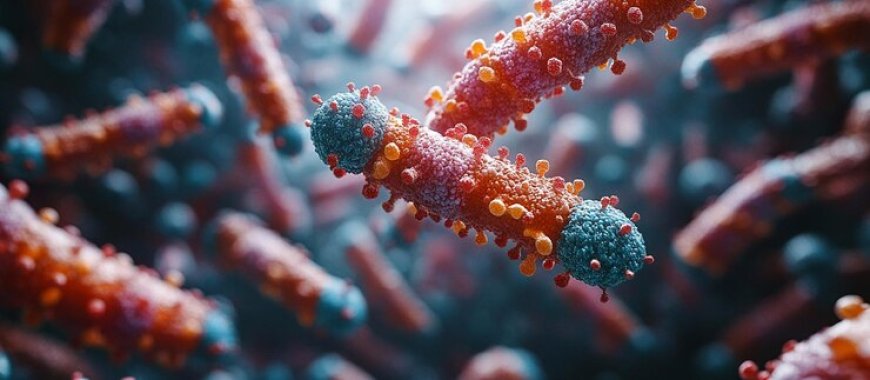
Recombinant monoclonal antibodies are becoming more popular because they solve many problems seen with older, hybridoma-derived antibodies.
These new types of antibodies are more reliable, easier to make again and again, and better suited for use in both lab research and medical treatments.
You Should Be Able to Make Antibodies Again Anytime You Need Them.
When scientists find a useful antibody, its important that they can keep making it in the future, especially if its used in research, diagnostics, or medicine.
Both hybridoma and recombinant methods allow you to produce the same antibody repeatedly, but how they store and reproduce the antibody is very different.
The Problem with Hybridoma Antibodies
Hybridoma-derived antibodies are made using living cells, which must be stored in extremely cold conditionsusually in liquid nitrogen.
These cells are fragile and can be lost or damaged if the freezer fails or if theyre not handled properly.
Anyone who has worked with tissue culture or liquid nitrogen storage knows it can be stressful. Sometimes, boxes fall apart, labels go missing, or tubes float away inside storage tanks.
If the hybridoma cells are lost, you lose your ability to make that specific antibody forever.
Why Recombinant Antibodies Are Easier and Safer to Store?
Recombinant antibodies solve this problem. Instead of keeping fragile living cells, you store the DNA sequence that tells cells how to make the antibody. This DNA can be saved digitally, like saving a file on a computer.
You can back it up in multiple places, store it safely, and recreate the antibody anytime just by using that sequence.
So even if something happens in the lab, the information to produce the antibody isnt lost. This makes recombinant antibodies much more dependable for long-term use.
Why Recombinant Antibodies Are Better for Storing Important Data?
With recombinant antibodies, you dont just store physical cellsyou also have the exact DNA sequence that codes for the antibody.
Usually, the physical material is stored as a glycerol stock, which is basically a way to freeze the DNA inside bacteria so it can be saved for a long time.
The great thing about having the DNA sequence saved as digital data is that it can be backed up safelyjust like important computer files.
You can keep copies in different places, including off-site or in the cloud, so you never lose the instructions needed to make that antibody again. This is a huge advantage because it protects against losing the antibody forever.
Why Antibodies Must Be Reproducible?
Reproducibility means being able to make the same antibody with the same properties every time. This is very important in research, diagnostics, and medicine.
Polyclonal antibodies, which come from different animals, can vary a bit each time they are made, because the animals immune response is never exactly the same. So, they arent always consistent.
Monoclonal antibodies are better because they come from a single source, so they are usually more consistent.
However, even with monoclonals, scientists prefer recombinant antibodies. Why? Because recombinant antibodies come from a known DNA sequence, so every time you make the antibody, it is exactly the same.
This also means you dont have to worry about problems like:
-
Hybridoma contamination: Sometimes the hybridoma cells (which make the antibody) get mixed up with other cells.
-
Genetic drift: Over time, hybridoma cells can change due to mutations during many rounds of growth, which can alter the antibody they produce
By using recombinant antibodies, researchers and doctors get consistent, reliable results every time. This is especially critical when antibodies are used to diagnose diseases or treat patients, where mistakes could have serious consequences.
Making Enough Antibodies to Meet Demand
If you want to use an antibody for research or medicine, you often need a large amount. Producing enough antibody reliably is very important.
Hybridomas are living cells, and each hybridoma is unique. Some hybridomas dont grow well or stop producing antibody after a while. This makes it tricky to get large, consistent batches.
Recombinant antibodies are made using advanced cell systems that can be scaled up easily.
Scientists can produce small amounts quickly using a process called transient transfection, or make huge quantities using stable cell lines that grow steadily over time.
How Recombinant Antibodies Are Made?
For small batches, scientists prepare the DNA and introduce it into cells for a short time (transient expression). For large batches, they create special stable cell lines that can grow and produce antibodies continuously.
Although making stable cell lines takes time (usually 3 to 6 months) and can be costly, the benefits are significant. You can choose the best cell line to produce lots of antibody without being stuck with a poorly performing hybridoma.
To Wrap Up
Recombinant antibodies are becoming much more popular in both disease diagnosis and treatment.
They solve many problems that traditional hybridoma antibodies have, like difficulties in making large amounts and unwanted immune reactions.
As technology keeps improving, recombinant antibodies are set to become the main method for producing antibodies. They will help drive new discoveries and better care in research, medical testing, and patient treatments.
At AAA Biotech, we are committed to providing top-quality recombinant antibodies to support your scientific and medical breakthroughs.